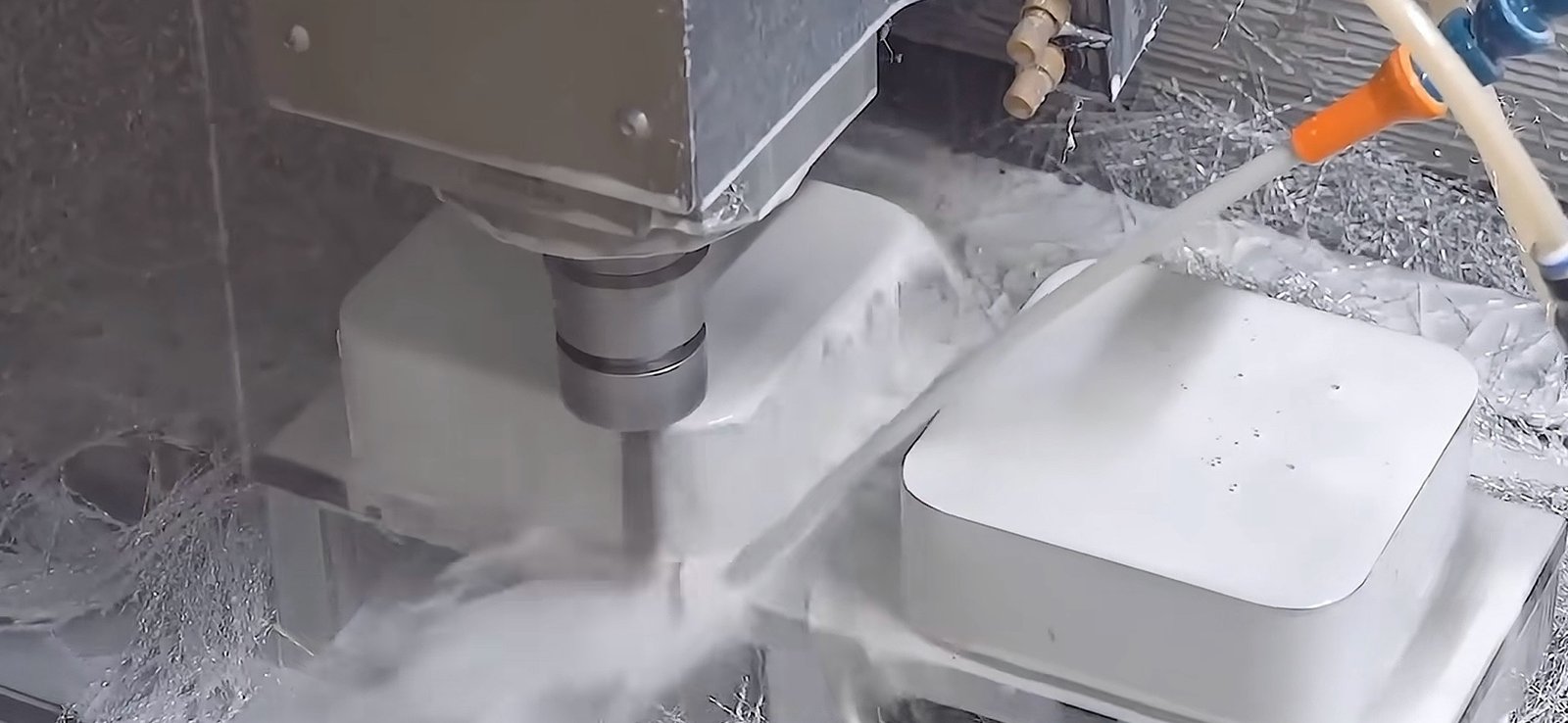
Custom metal brackets look simple until the drawing includes tight hole positions, bearing faces, cosmetic surfaces, PEM hardware, anodizing, or a first sample that must fit an existing machine. For aluminum projects, the right process is usually not “CNC or sheet metal” in isolation. The better question is which features need machining accuracy, which geometry can be formed from sheet, and how the supplier will control the bracket from drawing to finished part.
Quick answer: use CNC machining for thick, rigid, high-precision, or complex 3D aluminum brackets. Use sheet metal fabrication for thin formed brackets, panels, mounts, and cost-sensitive volumes. Use a hybrid process when the part needs both formed sheet geometry and machined reference faces, tapped holes, tight slots, or appearance-critical finishing.
Key Takeaways
- CNC machined aluminum brackets are best for tight tolerances, thick sections, precision holes, threaded features, and milled reference surfaces.
- Custom sheet metal brackets are best for formed shapes, lightweight supports, enclosure mounts, and batches where bending reduces cost.
- Hybrid brackets combine laser cutting, bending, CNC machining, hardware insertion, and surface finishing.
- For European and North American buyers sourcing from China, the main supplier risk is not just unit price. It is repeatability, communication, finish control, and lead time.
- Huade accepts sample orders, including one-piece samples, and simple samples can be produced in about 2 days when material and geometry are straightforward.
What Are Custom Metal Brackets?
Custom metal brackets are made-to-drawing support, mounting, alignment, or enclosure components. They may hold sensors, motors, rails, panels, circuit boards, covers, hinges, or structural assemblies. Unlike catalog brackets, they are built around the customer’s hole pattern, load direction, assembly space, material, finish, and tolerance requirements.
For aluminum brackets, common alloys include 5052 for bent sheet metal, 6061 for general machined brackets, and 7075 when higher strength is needed. Aluminum is widely used because it is lightweight, corrosion resistant, thermally conductive, and suitable for many industrial and consumer applications. The Aluminum Association describes aluminum as lightweight, corrosion resistant, and recyclable, while NIST material data also highlights aluminum’s low density and conductivity.
CNC Machined Brackets vs Sheet Metal Brackets
| Decision point | CNC machined bracket | Sheet metal bracket |
|---|---|---|
| Typical material form | Plate, block, bar, extrusion | Sheet or plate blank |
| Best geometry | Thick, rigid, complex 3D parts | Flat, bent, U-shaped, L-shaped, box-like parts |
| Precision features | Excellent for milled faces, bores, slots, threads | Good for cut profiles and bends; precision may need secondary machining |
| Cost driver | Machine time, setup, material removal | Cutting, bending, tooling, finish, hardware |
| Sample fit | Strong for 1-piece prototypes | Strong for quick formed samples |
| Common finishes | Anodizing, bead blasting, polishing, black oxide for steel | Powder coating, anodizing, brushing, plating |
If your bracket has thick bosses, counterbores, precision dowel holes, bearing seats, or tight flatness requirements, CNC machining is usually safer. If the bracket is a formed support with standard hole positions and a consistent thickness, sheet metal fabrication is usually faster and more cost-effective.
When CNC Machining Is the Better Choice
Choose CNC machining when the bracket needs features that depend on material removal rather than bending.
Tight hole location or alignment
Motor mounts, sensor brackets, and rail supports often need hole positions that line up with existing assemblies. CNC milling can control the relationship between holes, slots, pockets, and reference faces more predictably than a bend-only process.
Thick or load-bearing sections
If the bracket must resist vibration, support a rotating assembly, or hold a load without flexing, machining from 6061 or 7075 aluminum may be better than bending thin sheet. The extra material can be placed only where the part needs strength.
Precision threaded features
Tapped holes, threaded inserts, helicoils, and counterbored screws need enough wall thickness and tool access. CNC machining gives the engineer more control over thread depth, perpendicularity, and surrounding material.
Cosmetic or mating surfaces
Consumer electronics and premium equipment often need visible aluminum surfaces. CNC machining can create controlled chamfers, fine edges, and consistent surfaces before anodizing, bead blasting, polishing, or painting.
When Sheet Metal Fabrication Is the Better Choice
Use custom sheet metal brackets when geometry can be made by cutting and bending a flat blank.
Lightweight formed supports
L-brackets, Z-brackets, U-brackets, panel mounts, and equipment supports are often ideal for laser cutting and press brake bending. This keeps weight down and reduces unnecessary material removal.
Enclosure and panel mounting
Sheet metal brackets work well inside electrical enclosures, industrial cabinets, control boxes, and equipment housings. They can include slots, tabs, PEM fasteners, ventilation, and powder-coated finishes.
Cost-sensitive repeat production
Once the flat pattern and bend sequence are stable, sheet metal brackets can scale efficiently. The key is confirming bend radius, grain direction, hole-to-bend distance, and finish requirements before production.
When a Hybrid Bracket Makes Sense
Many practical brackets are not purely CNC or purely sheet metal. A hybrid route may be best when the bracket starts as a cut and bent part, then receives secondary machining.
Common hybrid examples include:
- Bent aluminum brackets with CNC-machined mounting faces
- Sheet metal frames with precision-milled slots
- Formed panels with tapped blocks or welded bosses
- Aluminum supports with anodizing after machining and deburring
- Industrial brackets with PEM hardware, welding, and final inspection
This is where a one-stop manufacturer matters. If one supplier cuts, bends, machines, finishes, inspects, and packs the parts, fewer details get lost between vendors.
Design Checklist Before Requesting a Quote
Before sending an RFQ for custom metal brackets, prepare these details:
- 3D CAD file in STEP, IGES, or X_T format.
- 2D PDF drawing with tolerances, threads, finish, and critical dimensions.
- Material choice, such as 5052, 6061-T6, 7075-T6, 304 stainless steel, or 316L stainless steel.
- Quantity for sample, pilot batch, and expected repeat order.
- Surface finish, such as anodizing, powder coating, sandblasting, brushing, or polishing.
- Assembly requirements, including inserts, PEM hardware, welding, or mating components.
- Lead-time target and delivery country.
If you are still testing a design, say so. For example: “We need one sample first for machine runnability testing, then a larger batch if the bracket fits.” That helps the supplier quote the sample and production route separately.
Common Mistakes That Increase Bracket Cost
Applying tight tolerances everywhere
Only critical interfaces need tight tolerances. If every hole, edge, and bend is over-specified, the part becomes slower to manufacture and harder to inspect.
Placing holes too close to bends
In sheet metal brackets, holes close to bend lines may distort during forming. A small design change can reduce scrap and improve repeatability.
Choosing 7075 when 6061 is enough
7075 aluminum is strong, but it is not always the most cost-effective or finish-friendly option. Many brackets work well in 6061-T6, especially when corrosion resistance and machining balance matter.
Treating the sample and production order as identical
One-piece samples are useful for fit checks, but production may require different fixturing, inspection planning, nesting, or finishing batches. Ask the supplier to explain both routes.
How Huade Supports Custom Bracket Projects
Huade Precision Manufacturing supports custom brackets through CNC machining, sheet metal fabrication, surface finishing, and inspection under one supplier workflow. That is useful when a bracket must move from a trial sample to repeat supply.
Typical support includes:
- CNC milling and turning for aluminum, steel, stainless steel, brass, copper, and engineering plastics
- Sheet metal laser cutting, bending, formed brackets, panels, and housings
- Surface finishing including anodizing, powder coating, sandblasting, polishing, electroplating, and black oxide
- CMM inspection, first article checks, material traceability, and outgoing quality control
- RFQ review based on CAD files, drawings, material, quantity, tolerance, and finish requirements
For simple samples, Huade can accept even one piece, and simple sample machining can be as fast as about 2 days when stock material and geometry allow it.
FAQ
What is the best material for custom metal brackets?
For aluminum brackets, 5052 is common for bent sheet metal, 6061-T6 is a strong general-purpose machined alloy, and 7075-T6 is used when higher strength is required. Stainless steel is better when corrosion resistance, stiffness, or higher temperature performance matters more than weight.
Are custom sheet metal brackets cheaper than CNC brackets?
Often yes, especially for thin formed parts and repeat batches. CNC brackets may be better when the design needs thick sections, precision holes, milled faces, tight threads, or complex 3D geometry. The lowest total cost depends on geometry, quantity, tolerance, and finish.
Can I order one custom bracket sample?
Yes. Huade can accept sample orders, including one-piece samples. For simple aluminum brackets, sample production can be as fast as about 2 days when material is available and the drawing is clear.
What files should I send for a bracket quote?
Send a 3D CAD file, a 2D PDF drawing, material, quantity, surface finish, tolerance requirements, and any assembly notes. If the design can be modified slightly, mention the target function so engineers can suggest a manufacturable approach.
Conclusion
Custom metal brackets are not just small hardware. They affect alignment, assembly speed, vibration, appearance, and long-term supply stability. For aluminum projects, CNC machining is best for precision and rigidity, sheet metal fabrication is best for formed lightweight supports, and hybrid production is often the practical answer.
If you need custom metal brackets from a China CNC machining and sheet metal supplier, upload your CAD files and drawings through the quote page. Huade engineers can review your material, finish, tolerance, sample quantity, and lead-time target before production.