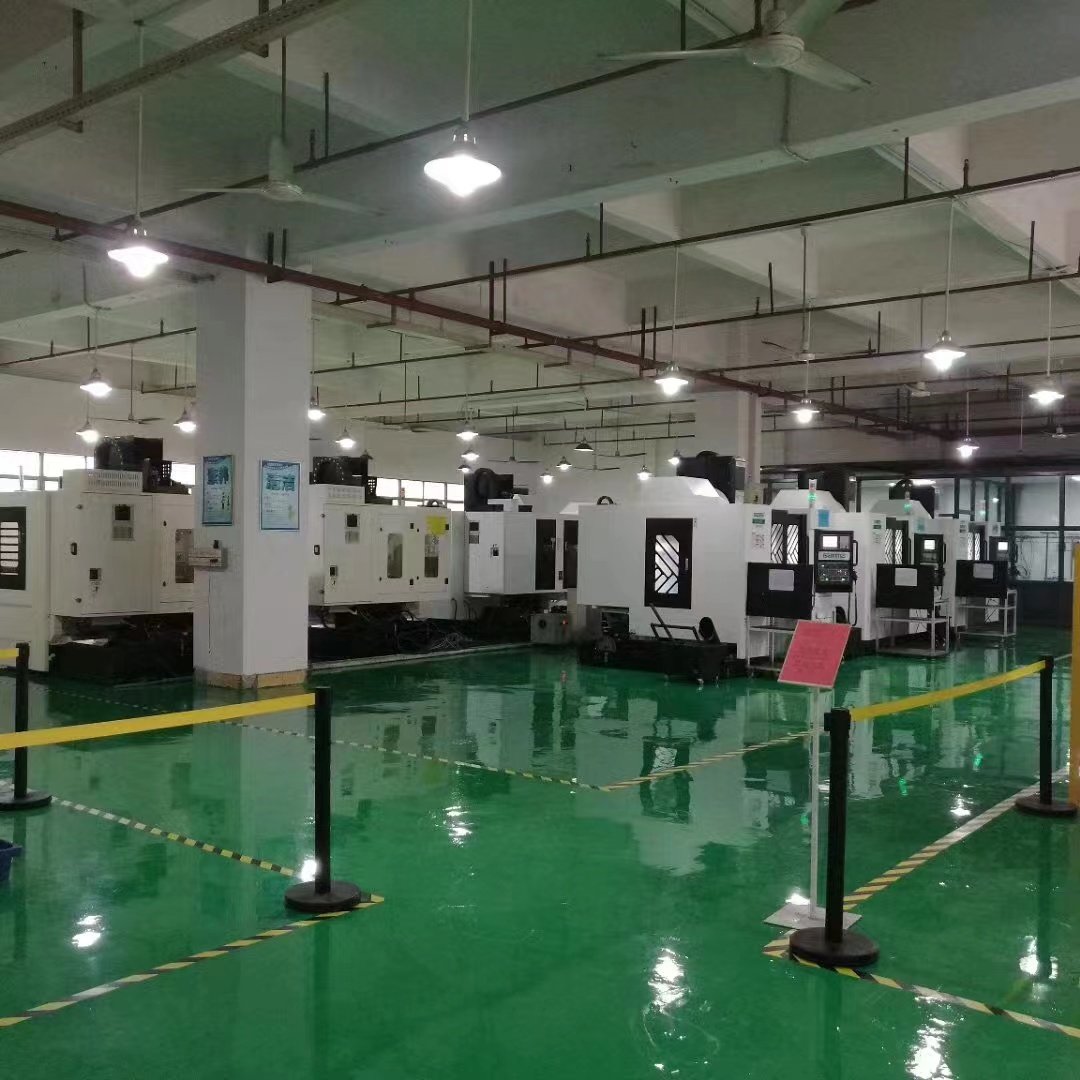
Finding a reliable supplier for complex custom components is harder than finding a low unit price. Complex parts usually involve drawings, tolerances, material choices, surface finishing, inspection reports, sample approval, and long-term repeat supply. If the supplier only quotes quickly but cannot explain the process route, the risk moves from the purchase order to your assembly line.
Quick answer: a reliable supplier for complex custom components should provide engineering review, sample production, clear MOQ and pricing structure, CNC machining capability, sheet metal and finishing support, documented quality checks, and stable repeat supply. For buyers in Europe and North America sourcing from China, the strongest signal is not only low cost. It is whether the supplier can move from trial samples to consistent production.
Key Takeaways
- Complex custom components need process planning, not only quote comparison.
- Ask suppliers how they handle samples, design modifications, MOQ, lead time, surface finishes, and inspection.
- One-stop production reduces risk when parts require CNC machining, sheet metal fabrication, and secondary finishing.
- For aluminum parts, match alloy and process to function: 5052 for many formed parts, 6061 for general machining, 7075 for higher strength.
- Huade accepts sample orders, including one piece, and simple samples can be produced in about 2 days when material and geometry allow.
What Makes a Custom Component Complex?
A custom component becomes complex when failure risk depends on more than one dimension or process. A simple block can become complex if it needs a tight datum, threaded inserts, anodized cosmetic surfaces, flatness control, sealing features, and reliable repeat supply.
Common complexity drivers include:
- Multiple manufacturing processes in one part or assembly
- Tight tolerance features mixed with general dimensions
- Material and finish requirements that affect fit or appearance
- Customer design changes after the first RFQ
- Trial samples needed before a production order
- Export packaging and documentation requirements
- Repeat orders where consistency matters more than first-sample speed
This is common in industrial equipment, consumer electronics, automotive components, robotics, energy storage, and general machinery.
Supplier Checklist for Complex Custom Components
| Supplier capability | Why it matters | What to ask |
|---|---|---|
| Engineering review | Prevents quoting a design that is hard to make consistently | ”Can you review the drawing and suggest manufacturability changes?” |
| Sample production | Lets you test fit, runnability, and assembly before production | ”Can you make one sample first? What is the sample lead time?” |
| CNC machining | Controls precision faces, holes, pockets, threads, and 3D geometry | ”What tolerances can you hold on this material and feature?” |
| Sheet metal fabrication | Supports brackets, housings, panels, and formed structures | ”Can you cut, bend, insert hardware, and finish the part?” |
| Surface finishing | Controls corrosion, cosmetics, wear, and product appearance | ”Which finishes are in-house or coordinated by your team?” |
| Inspection reporting | Reduces risk for overseas orders | ”Can you provide FAI, CMM, OQC, or material certificates?” |
| Repeat supply | Protects long-term production | ”How will you control process, packaging, and communication after sample approval?” |
Ask About MOQ and Pricing Structure Early
Many RFQs fail because the buyer asks for “best price and lead time” but the supplier does not know whether the project is a one-piece sample, a 20-piece trial batch, or a repeat production program.
A clearer RFQ asks for:
- Prototype price for 1 piece or a small sample batch.
- Sample lead time.
- Production price at target volumes.
- MOQ for each process and finish.
- Estimated production lead time after sample approval.
- Shipping options based on the customer’s preference.
If you need trial samples shipped to Sweden for machine runnability testing, say that directly. It tells the supplier that sample function matters and that production pricing will come later.
Evaluate Design Modification Support
Customers often ask, “Can you modify the existing design slightly to accommodate our ideas?” A reliable supplier should not casually change a drawing without control. But they should be able to review the design, explain what can be modified, and confirm how the change affects machining, bending, finishing, and inspection.
Good design modification support includes:
- DFM review based on CAD files and 2D drawings
- Suggestions for bend radius, hole clearance, wall thickness, or tool access
- Material recommendations when the selected alloy is not ideal
- Finish warnings for sharp edges, deep pockets, or cosmetic surfaces
- Confirmation that all changes are reflected in the final drawing
This is especially important for aluminum CNC machining because alloy choice, tool access, clamping, and surface finish can change the final result.
Why One-Stop Manufacturing Reduces Risk
Many complex custom components do not stop at CNC machining. A part may need milling, turning, laser cutting, bending, anodizing, polishing, black oxide, powder coating, hardware insertion, inspection, and export packaging.
If each process goes to a different supplier, the buyer carries the coordination burden. If a hole is off after bending, the sheet metal vendor may blame the drawing, the machining vendor may blame the blank, and the finisher may blame surface preparation.
A one-stop supplier reduces that risk by controlling:
- The manufacturing route from drawing to finished part
- Communication between machining, sheet metal, and finishing teams
- Inspection before and after secondary operations
- Packaging that protects finished surfaces
- Repeat process control for later orders
This does not mean every process must physically happen in one room. It means the supplier takes responsibility for the complete finished component.
Quality Signals to Look For
ISO states that ISO 9001 is a globally recognized quality management standard that helps organizations improve performance and meet customer expectations. For sourcing custom components, that principle should show up in the supplier’s daily process.
Look for these quality signals:
- ISO-based quality management
- First Article Inspection for new parts
- CMM inspection for critical CNC features
- Material Test Certificates when alloy traceability matters
- Outgoing Quality Control before shipment
- Clear packaging requirements for finished or cosmetic parts
- Case studies showing real parts and long-term supply relationships
For aluminum, technical material understanding also matters. NIST material references describe aluminum as low-density and conductive, while the Aluminum Association highlights aluminum’s lightweight and corrosion-resistant properties. A capable supplier should connect those material advantages to real manufacturing choices, not just repeat general claims.
Red Flags When Comparing China CNC Suppliers
Be cautious if a supplier:
- Quotes without asking for drawings, material, finish, or quantity.
- Says every tight tolerance is easy without reviewing geometry.
- Cannot separate sample price from production price.
- Avoids answering MOQ and lead-time questions.
- Has no clear inspection process.
- Cannot explain whether CNC machining, sheet metal, or a hybrid route is better.
- Pushes the cheapest alloy without discussing function.
- Cannot provide case studies, production photos, or quality documentation.
The cheapest quote can become expensive if parts fail assembly, arrive late, or cannot be repeated consistently.
A Practical RFQ Template
Use this template when contacting a custom parts supplier:
Hello,

We are looking for a supplier for custom components for [industry/application].

Attached files:
- 3D CAD: [STEP/IGES/X_T]
- 2D drawing: [PDF/DWG]

Material: [6061-T6 / 7075-T6 / 5052 / stainless steel / other]
Finish: [anodizing / powder coating / polishing / as-machined / other]
Sample quantity: [1 pc / 5 pcs / 10 pcs]
Expected production quantity: [monthly/annual estimate if known]
Critical dimensions: [list drawing callouts]
Target lead time: [date or business days]
Destination country: [country]

Please confirm:
1. Best sample price and lead time
2. MOQ and pricing structure
3. Whether the design can be modified slightly for manufacturability
4. Estimated production lead time after sample approval
5. Inspection report options
Where Huade Fits
Huade Precision Manufacturing is best suited for buyers who need more than a single operation. The company supports custom CNC machining, aluminum CNC machining, CNC turning, sheet metal fabrication, surface finishing, inspection, and repeat supply.
This is relevant when the RFQ includes:
- Aluminum machined parts
- Custom metal brackets
- Fabrication parts
- Sheet metal pieces
- Small metal parts
- Industrial equipment components
- Consumer electronics housings
- Automotive fixtures or mounting parts
- Components that need samples before production
Huade’s website includes real case studies, certificate records, quality pages, and RFQ forms. Certificates are confirmed by the business owner as real and valid, and the site shows production examples that can help buyers evaluate capability before sending files.
FAQ
What is the most important factor when choosing a custom parts supplier?
For complex custom components, the most important factor is repeatable execution. Price matters, but the supplier must also understand the drawing, process route, material, finish, inspection plan, packaging, and production repeatability.
Should I choose a CNC supplier or a sheet metal supplier?
Choose based on the part design. CNC suppliers are better for precision 3D geometry, threads, tight holes, and machined faces. Sheet metal suppliers are better for formed panels, brackets, and housings. If the part needs both, choose a supplier that can coordinate both processes.
Can a supplier make only one sample?
Yes, if the supplier supports prototype work. Huade can accept sample orders, including one-piece samples. Simple samples can be produced in about 2 days when material is available and the geometry is straightforward.
How do I ask whether my design can be modified?
Send the current CAD file, drawing, and a short explanation of the intended function. Ask the supplier to mark manufacturability suggestions separately from required design changes so your engineering team can approve the final revision.
Conclusion
A reliable supplier for complex custom components should help you move from drawing to sample to repeat production with fewer surprises. For European and North American buyers comparing China CNC machining manufacturers, the strongest supplier is usually the one that combines stable supply, engineering review, CNC machining, sheet metal fabrication, finishing, inspection, and clear communication.
If you need custom parts manufacturing for aluminum components, fabrication parts, brackets, housings, or small metal parts, send your drawings through the Huade RFQ page. Include your material, sample quantity, MOQ question, target lead time, and any design modification needs.