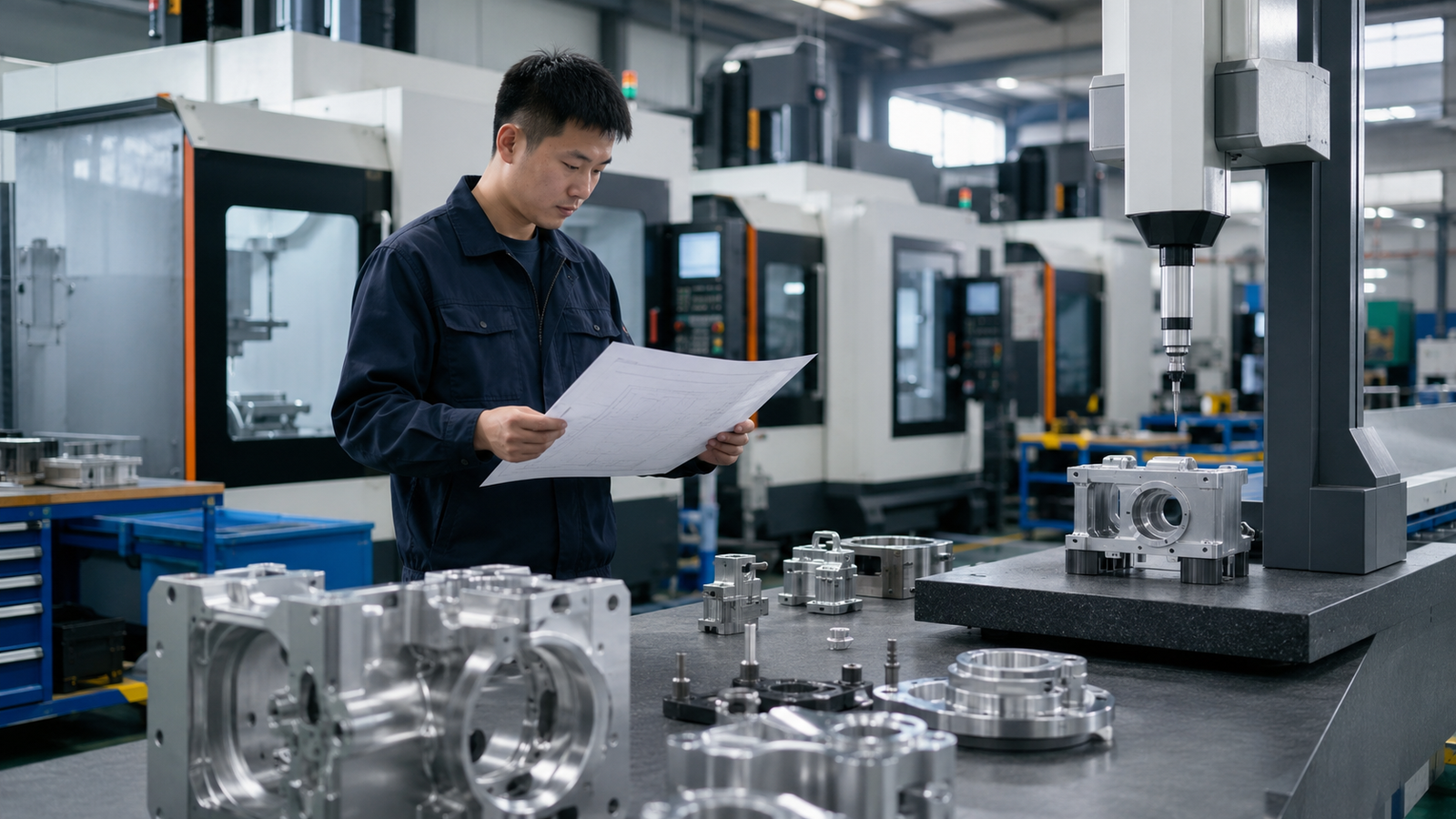
Fabrication parts can mean many things: laser-cut sheet metal pieces, CNC machined aluminum housings, bent brackets, turned shafts, welded assemblies, finished panels, or small custom components used inside industrial equipment. That broad meaning creates a sourcing problem. A buyer may search for “fabrication parts” but actually need a supplier who can combine CNC machining, sheet metal fabrication, surface finishing, inspection, and repeat supply.
Quick answer: fabrication parts are custom components made through cutting, bending, machining, forming, welding, finishing, or assembly. For industrial buyers, the best supplier is usually not the cheapest single-process vendor. It is the supplier that can control the drawing, material, process route, quality checks, and lead time from sample to repeat production.
Key Takeaways
- Fabrication parts may include CNC machined parts, sheet metal pieces, brackets, housings, rails, panels, frames, and finished assemblies.
- Aluminum is common because it is lightweight, corrosion resistant, machinable, and suitable for anodizing or other finishes.
- One-stop production reduces handoff risk when parts need both machining and fabrication.
- For trial samples, ask the supplier to quote sample cost, lead time, MOQ, and the production price structure separately.
- Huade can accept sample orders, including one-piece samples, and simple samples can be produced in about 2 days when conditions are straightforward.
What Are Fabrication Parts?
Fabrication parts are custom components produced from raw material through manufacturing processes such as cutting, bending, CNC machining, turning, welding, finishing, and assembly. In B2B sourcing, the phrase often overlaps with metal fab parts, fabrication components, custom parts manufacturing, and custom component fabrication.
For aluminum projects, fabrication parts may include:
- CNC machined aluminum brackets
- Sheet metal panels and covers
- Industrial equipment housings
- Consumer electronics enclosures
- Automotive fixtures and mounting parts
- Heat sinks and thermal plates
- Small machined blocks, spacers, shafts, and connectors
- Hybrid assemblies that combine CNC and sheet metal work
The key is not the label. The key is matching the design to the right process route.
Common Types of Fabrication Parts
| Part type | Typical process | Common material | Buyer concern |
|---|---|---|---|
| Brackets and supports | Laser cutting, bending, CNC machining | 5052, 6061, stainless steel | Hole position, bend accuracy, finish |
| Housings and enclosures | CNC milling, sheet metal, finishing | 6061, 5052, aluminum extrusion | Cosmetic surface, assembly fit, sealing |
| Panels and covers | Sheet metal cutting, bending, powder coating | Aluminum, stainless steel, mild steel | Flatness, coating, mounting holes |
| Precision blocks | CNC milling | 6061, 7075, alloy steel | Tolerance, surface finish, datum control |
| Shafts and round parts | CNC turning, mill-turn | Aluminum, stainless steel, brass | Concentricity, threads, runout |
| Finished assemblies | Mixed process | Multiple materials | Supplier coordination, inspection, packing |
Why Aluminum Fabrication Parts Are Popular
Aluminum is widely used for fabrication parts because it balances weight, machinability, corrosion resistance, thermal conductivity, and finish options. The Aluminum Association highlights aluminum’s lightweight, corrosion-resistant, and recyclable properties. NIST material data also describes aluminum as having low density, good conductivity, and corrosion resistance.
For sourcing teams, this means aluminum can support several product goals at once:
- Lower part weight compared with many steel designs
- Good corrosion resistance for industrial and consumer use
- Faster machining than many harder metals
- Strong cosmetic options through anodizing, brushing, polishing, or painting
- Useful thermal behavior for heat sinks, enclosures, and electronics
However, the alloy still matters. 5052 is often better for formed sheet metal. 6061 is a strong general choice for CNC machined parts. 7075 is used when strength is the priority, but it may not be necessary for every bracket or enclosure.
CNC Machining vs Sheet Metal Fabrication
Fabrication parts often require a decision between CNC machining and sheet metal fabrication.
CNC machining is better for:
- Thick aluminum blocks or plates
- Tight tolerances and datum surfaces
- Threaded holes, counterbores, pockets, and precision slots
- Complex 3D geometries
- Small samples where tooling should be avoided
- Parts that require CMM inspection against a 3D model
Sheet metal fabrication is better for:
- Thin panels, covers, brackets, and housings
- Bent shapes where forming reduces cost
- Large flat parts with cutouts
- Powder-coated or brushed enclosures
- Repeat batches after the flat pattern is validated
Hybrid fabrication is better for:
- Bent parts with machined faces
- Sheet metal assemblies with CNC blocks
- Enclosures with tight sealing lands
- Brackets with formed geometry and precision threaded features
- Products needing fabrication, finishing, and inspection from one supplier
How to Prepare a Fabrication Parts RFQ
A strong RFQ helps the supplier quote faster and reduces later surprises.
Prepare this information:
- CAD files: STEP, IGES, X_T, DXF, DWG, or PDF drawings depending on the process.
- Material: alloy and temper when known, such as 6061-T6, 7075-T6, 5052, 304, or 316L.
- Quantity: sample quantity, pilot batch, and expected repeat order.
- Critical tolerances: only mark tight tolerances where function requires them.
- Surface finish: anodizing, powder coating, polishing, sandblasting, passivation, brushing, plating, or as-machined.
- Assembly needs: PEM hardware, welding, threaded inserts, gasket grooves, packaging, or part marking.
- Lead time and delivery: sample deadline, production schedule, and destination country.
If your message sounds like “I will appreciate your response with your best price and lead time,” add the drawing package and target quantity. If you need samples shipped to Sweden, Germany, the United States, or another market for runnability testing, state that clearly.
Sample Orders, MOQ, and Lead Time
For custom fabrication parts, MOQ depends on process, material, setup, and finishing. A one-piece CNC sample may be realistic. A formed sheet metal part may need setup time but still be practical for low-volume validation.
At Huade, sample orders can be accepted, including one-piece samples. For simple parts, sample production can be as fast as about 2 days when the material is available and the geometry is straightforward. More complex parts, tight tolerances, special finishes, or multi-part assemblies will need more time.
When comparing quotes, separate these four numbers:
- Sample unit price
- Sample lead time
- Production unit price at target quantity
- Production lead time after sample approval
This prevents a common sourcing mistake: judging a long-term supplier only by the cost of the first sample.
Quality Checks for Fabrication Parts
ISO explains that a quality management system standardizes processes and responsibilities so organizations can improve quality and meet customer expectations. For fabricated parts, that idea becomes practical through inspection and traceability.
Important quality checks include:
- First article inspection for the first sample or first production run
- CMM inspection for precision CNC features
- Caliper, height gauge, and gauge checks for sheet metal dimensions
- Surface roughness checks where sealing or cosmetics matter
- Material certificates for alloy traceability
- Outgoing quality control before packing and shipment
For repeat orders, inspection planning should be discussed before the first batch. It is much easier to define critical dimensions early than to argue about them after parts arrive.
Choosing a Supplier for Fabrication Parts
When choosing between China fabrication suppliers, look beyond the price table.
Ask these questions:
- Can the supplier support both CNC machining and sheet metal fabrication?
- Can they modify an existing design slightly to improve manufacturability?
- Do they understand aluminum alloys, finishes, and tolerance tradeoffs?
- Can they produce one sample before a larger order?
- Can they provide inspection reports, material traceability, and clear packaging?
- Do they have case studies or proof of repeat supply?
- Can they support long-term stable supply instead of only one urgent order?
For European and North American buyers, communication is also part of quality. A supplier should be able to explain what will be made, which process is used, what the lead time is, and what risks exist before production starts.
Where Huade Fits
Huade Precision Manufacturing is a factory-direct China CNC machining manufacturer and fabrication partner. The strongest fit is not commodity raw sheet or off-the-shelf brackets. It is custom fabrication parts where the buyer needs engineering review, sample production, machining, sheet metal, surface treatment, inspection, and repeat supply.
Relevant internal resources:
- Custom CNC machining services
- Aluminum CNC machining
- Sheet metal fabrication service
- Surface finishing services
- Case studies from real production programs
FAQ
What is the difference between fabrication parts and machined parts?
Machined parts are usually made by removing material with CNC milling, turning, drilling, or grinding. Fabrication parts is a broader term that can include machined parts, sheet metal parts, formed components, welded assemblies, and finished metal parts.
Can fabrication parts be made from aluminum?
Yes. Aluminum is common for fabrication parts because it is lightweight, corrosion resistant, machinable, and compatible with finishes such as anodizing, brushing, polishing, and painting. Common choices include 5052 for formed sheet and 6061 for CNC machined parts.
What is the best way to reduce fabrication cost?
Use realistic tolerances, choose the right alloy, avoid unnecessary tight dimensions, design bends with proper radius and hole clearance, and separate cosmetic requirements from functional requirements. Sending both 3D CAD and 2D drawings also reduces quoting ambiguity.
Can I start with one sample?
Yes. Huade can accept sample orders, including one-piece samples. Simple samples can be produced in about 2 days when material and geometry allow. Production pricing should still be quoted separately after the sample route is confirmed.
Conclusion
Fabrication parts are not one process. They are a sourcing category that may require CNC machining, sheet metal fabrication, surface finishing, inspection, and supplier coordination. For aluminum components, the best result often comes from choosing a factory that can review the design and recommend the right route before cutting material.
If you need fabrication parts for industrial equipment, consumer electronics, automotive, robotics, or general machinery, send your CAD files through the RFQ page. Huade can review your drawing, sample quantity, MOQ needs, pricing structure, lead time, and finishing requirements.